
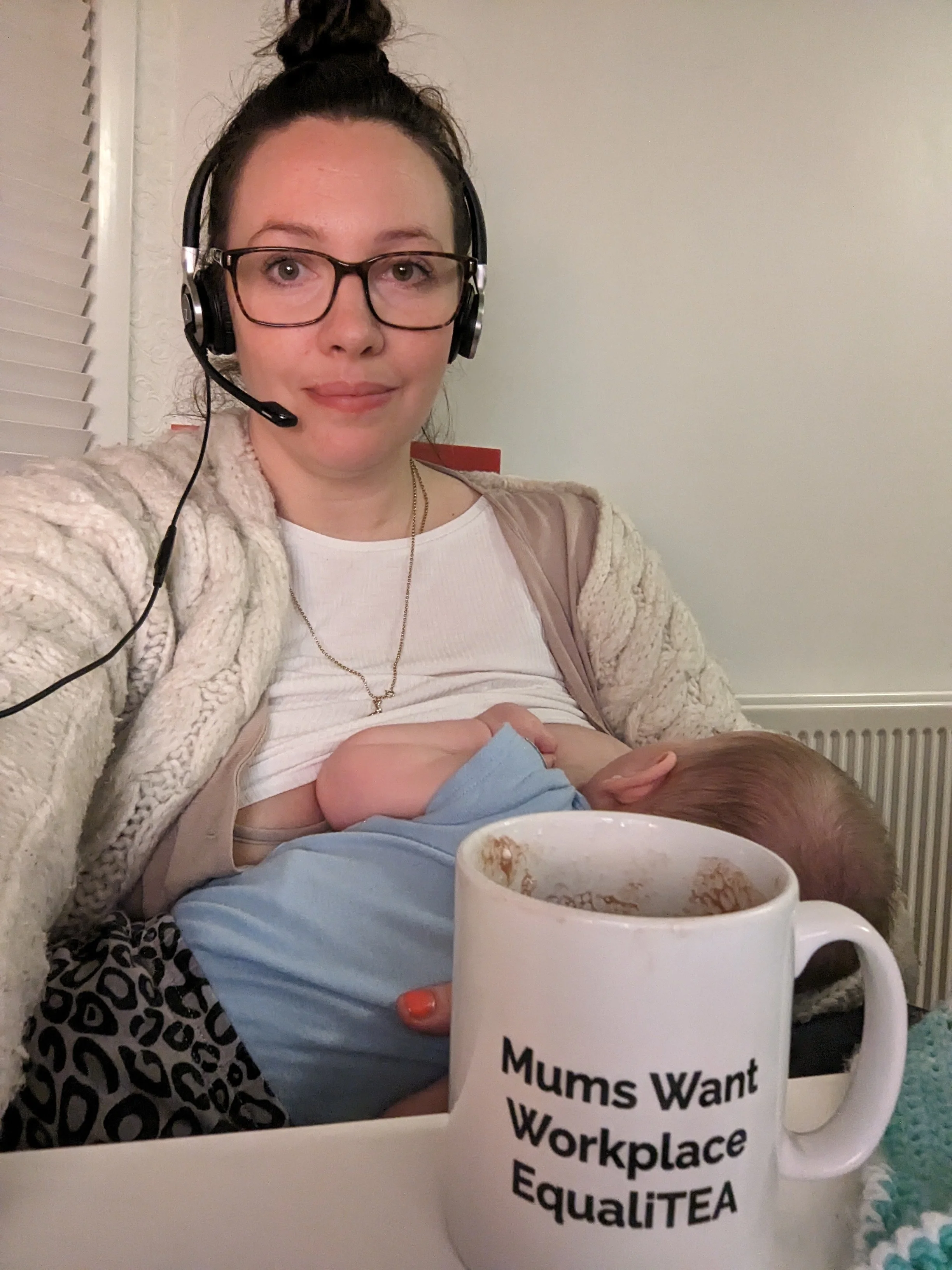
Returning to (paid) work while breastfeeding in the UK can feel unclear.
Do you have the right to pump at work?
Can your employer refuse breaks?
How often will you need to express?
What do other companies actually provide?
Here are the practical answers, and how to plan this in a way that works for you.
First: how much you need to pump will vary (a lot)
One of the most common questions is:
“How often will I need to express milk at work?”
The honest answer is: it depends.
It depends on:
Your baby’s age.
Whether they are exclusively breastfed or combi-fed.
Whether you are returning at 4 months or 11 months.
Whether you are full-time in the office, hybrid, remote, or travelling.
Your own supply and comfort levels.
A parent returning at 4–6 months may need to express every few hours to maintain supply and avoid discomfort. You may also be supplying milk for bottles while you are apart.
A parent returning at 10–12 months may not need to pump at work at all (or perhaps just for relief in the first month or so as they adjust).
A parent with a toddler may feed morning and evening only.
There is no universal schedule. I and others have found our bodies adapt really well, and we’ve been able to continue feeding responsively while together, while also being comfortable when working.
If you are feeling unsure what your body and baby might need, it can really help to talk it through with:
The National Breastfeeding Helpline (0300 100 0212, open 24/7).
A trained peer supporter (your local family hub or health visiting team can be helpful signposting this)
An IBCLC (International Board Certified Lactation Consultant).
Do I have the right to pump at work in the UK?
There is no specific statutory right to paid pumping breaks.
However, that does not mean your employer can ignore the issue.
Under the Equality Act 2010, unfavourable treatment because you are breastfeeding can amount to sex discrimination.
Employers also have duties to protect your health and safety.
The Health and Safety Executive advises that employers should provide a suitable place to rest and, where needed, a clean space to express milk. Toilets are explicitly listed as not suitable.
So while the law does not list “pumping breaks” in black and white, employers are expected to manage this properly.
For support on your rights at work, the ACAS information on returning to work or Maternity Action (and their helpline) are great resources.
Do I have to use a toilet to express milk?
No. Absolutely not.
Toilets are not considered appropriate spaces for expressing milk under health and safety guidance.
You need a private, hygienic space.
It does not have to be glamorous. It does have to be suitable.
What good breastfeeding support at work actually looks like
Support is not about a token gesture. It is about planning.
At a minimum, good practice would include:
A private, lockable room that is not a toilet.
A chair and flat surface.
Access to a plug socket.
Fridge space for milk storage (this might be a shared fridge, so bring labels!)
Protected diary time.
What the best companies provide:
A dedicated wellness or parents’ room.
Clear written policies on expressing milk at work.
Return-to-work planning built into maternity transitions.
Line managers trained to raise the topic proactively.
A small fridge within the room.
Sink access nearby.
A culture where diary blocks are respected.
This is not over-the-top. It is a retention strategy.
Clothing and pumping: the practical side nobody mentions
Another common search is:
“What should I wear to pump at work?”
The answer is practicality over perfection.
You may want:
Easy-access tops or nursing-friendly clothing.
Layers you can remove quickly.
Darker fabrics in the early weeks in case of leaks.
Spare breast pads in your bag.
A structured bra that works with your pump.
If you are pumping during the workday, choosing clothes that allow discreet access can reduce stress enormously.
WFH, hybrid work, and travel
If you work from home, your needs may look different.
Support might mean:
Realistic meeting scheduling.
Not stacking back-to-back calls.
Flexibility if you are feeding directly rather than pumping (including being camera off if you need/want to).
If you travel for work:
Is there fridge access in your hotel room?
Is there time between meetings?
Is milk storage realistic?
How to ask for pumping support at work
The tone matters less than the clarity.
Because this is not a personal favour. It is a return-to-work adjustment that will enable you to do your best work.
You could say something like:
“As part of my return to work plan, I need a private space and protected time to express milk. Can we talk over how that fits into my schedule?”
If you want to link it to performance:
“When I can express comfortably and without rushing, I’m more focused and productive. I’d like to plan this properly.”
This is about culture, not just milk
When a workplace handles breastfeeding well, it signals something bigger.
We expect parents to stay.
We understand that bodies change.
We plan for care, rather than pretending it does not exist.
That culture benefits everyone.
If you are feeling unsure
Many mums search:
“Breastfeeding at work UK rights”
“Can my employer refuse pumping breaks?”
“How often do I need to pump at work?”
“Returning to work breastfeeding anxiety”
Underneath those searches is usually one question:
Can I make this sustainable?
You deserve proper support.
If you want space to think through your return to paid work, including how you want to navigate feeding (and sleep!), join my email list to be the first to hear when coaching spots re-open after my maternity leave.
You might also find these blogs helpful:
Frequently Asked Questions: Breastfeeding at Work UK
Do I have a legal right to pump at work in the UK?
There is no specific statutory right to paid pumping breaks. However, under the Equality Act 2010, unfavourable treatment because you are breastfeeding may amount to sex discrimination. Employers also have health and safety duties to support you.
Does my employer have to provide a room for expressing milk?
Employers should provide a private, clean space that is not a toilet if you need to express milk at work. This falls under health and safety guidance, although it isn’t a clear statutory right.
How often do I need to pump at work?
It depends on your baby’s age, feeding pattern, and your working hours. Some parents need to pump every few hours. Others returning later may not need to express at work at all. Speaking to the National Breastfeeding Helpline, a peer supporter or an IBCLC can help you plan.
Can my employer refuse pumping breaks?
An employer can discuss how arrangements work in practice. They should not refuse to consider reasonable adjustments or treat you unfavourably because you are breastfeeding.
What should I wear if I am pumping at work?
Nursing-friendly tops, layers, supportive bras and darker fabrics can make expressing milk easier and less stressful during the working day.